
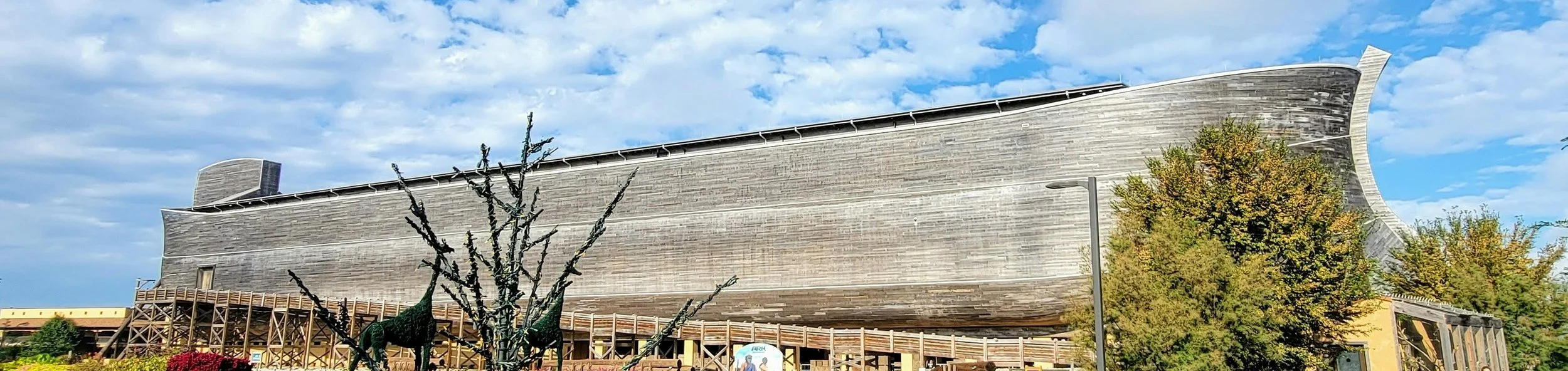
In the seventh month, on the seventeenth day of the month, the ark rested upon the mountains of Ararat (Ge. 8:4).
A Renewed Search for Noah’s Ark
Have you seen Noah’s Ark? Can you picture it? Do you see a big wooden boat with a giraffe and an elephant on it? The biblical account of God’s destructive judgment upon the earth through a global flood, and His preservation of Noah and his family, is one of the best-known stories in the entire Bible. Its familiarity extends well beyond Christianity. People throughout the world recognize some version of the story, regardless of their religious background. Yet for thousands of years, the historical accuracy of the biblical account has been widely debated by skeptics, often pointing to what they regard as a lack of archaeological evidence to substantiate it. But perhaps not for long.
This past June, a newly authorized, internationally supported archaeological project officially began in eastern Türkiye, near Mount Ararat, at a site known as the Durupinar Formation. Directed by Dr. Cenker Tila of Sivas Cumhuriyet University in partnership with Noah’s Ark Scans, the project seeks to answer a question that has fascinated researchers for decades: “Have we found Noah’s Ark?”
Faith and Careful Examination
For Christians, this is an exciting development. If the remains of Noah’s Ark were discovered in the mountains of Ararat, it would rank among the greatest archeological discoveries in history! But finding the Ark is not necessary to establish that the Bible is the Word of God. We already have compelling reasons to believe that Scripture is the inerrant and inspired Word of God, reasons that do not depend upon archaeological confirmation of the Ark’s existence. These include the remarkable coherence of the biblical books, which testifies to their Divine authorship. The Bible’s perfect record of prophetic fulfillment. Its historical and geographical reliability. And the fact that Jesus Himself accepted the Scriptures as God’s Word.
But what if Noah’s Ark was actually found? What if the evidence ultimately established that this ancient structure was indeed the vessel described in Genesis?
A discovery like that would provide extraordinary historical confirmation of the biblical account of Noah. It would also serve as a powerful reminder of God’s warning to humanity concerning the consequences of sin and the reality of His judgment. At the same time, until all the evidence has been thoroughly examined, believers should approach the possible discovery with both excitement and intellectual honesty. We can eagerly anticipate what the investigation may uncover without claiming more than the evidence demonstrates. Faith does not require us to abandon careful examination of the facts. Enthusiasm for a potential discovery does not justify declaring the matter settled before the evidence has been properly tested.
Examining the Durupinar Formation
Named after Turkish Army Captain Ilhan Durupinar, the Durupinar Formation is a boat-shaped geological feature identified in aerial reconnaissance photographs in 1959. For decades, it has fascinated researchers and observers who have wondered whether it could mark the resting place of Noah’s Ark.
Previous surveys of the area, including investigations conducted in 1987, 2019, and 2024, employed a variety of techniques, including core sampling, three-dimensional ground-penetrating radar, thermography, and subsurface mapping. These studies identified anomalies beneath the surface that some researchers believe could indicate the presence of a man-made structure buried under the soil. Some have interpreted these findings as possible corridors and room-like structures extending throughout the formation.
Frequent updates from Noah’s Ark scans have also circulated widely on social media, sharing the progress and preliminary findings of the investigation. Photographs, underground imaging, drone footage, video from tunneling robots, and brief interviews or commentary from members of the research team have appeared across Facebook, Instagram, and other platforms. Many of these posts have been reposted by others with captions such as “100% Confirmed,” giving countless people the impression that Noah’s Ark has officially been discovered. That conclusion, however, has not yet been established by the research team.
No formal determination has been announced confirming that the Durupinar Formation contains the actual remains of Noah’s Ark. While the discoveries and data gathered thus far may be intriguing, suggestive, or even compelling to some observers, for now they remain inconclusive. Additional testing, independent verification, and ultimately peer review will be necessary before a definitive conclusion can be reached.
That process will take time. Soil samples must be tested, data must be analyzed, and competing explanations must be carefully evaluated. In the meantime, the temptation to declare, “We found Noah’s Ark!” may be difficult to resist. Nevertheless, patience and careful investigation are essential if the findings are to withstand serious scrutiny.
The Historical Significance of Finding the Ark
If the evidence eventually proves the discovery of the Ark in the Durupinar Formation, the implications would be enormous. First and foremost, would be the discovery’s historical significance. Uncovering the Ark would provide powerful evidence that the account of Noah is not merely a religious tale contrived to inspire faith, but a record of an actual historical event involving real people who survived a cataclysmic judgment by taking refuge in a vessel, just as the Bible records. If the structure proves to be the Ark, the dimensions and resting location precisely matching those depicted in Scripture would be a remarkable corroboration of the account recorded in Genesis.
Beyond the Ark itself, finding its remains would also further validate the reality of the flood described in the Bible. The Durupinar Formation resides in the mountains of eastern Türkiye, far from any substantial present-day body of water. The presence of a vessel of such magnitude in that location naturally invites questions about how it came to rest there. From a biblical perspective, the Flood provides the explanation for why Noah’s Ark would have been deposited in such a place.
Of course, discovering a structure that resembles the Ark would not, by itself, settle every question concerning the Flood. Even if the discovery were confirmed, not everyone would accept its biblical significance. Some would challenge the identification, while others would inevitably offer alternative explanations for the evidence.
For example, flood traditions have been recorded in cultures throughout the world. Those who do not share a biblical worldview might appeal to these accounts as alternative rationale for the existence of a vessel buried in the mountains of Türkiye. Others might accept that the structure was an ancient vessel while rejecting the conclusion that it confirms a global flood as described in Genesis. They might suggest instead that it was associated with a regional deluge. In other words, even a remarkable archaeological discovery would not eliminate every disagreement about the biblical account. People interpret evidence through their own assumptions about history, Scripture, and the natural world.
This should not surprise Christians. Archaeological evidence can strengthen the historical case for Scripture, but people do not always draw the same conclusions from the same evidence. The possibility that skeptics would continue to disagree does not mean a discovery would be insignificant. It simply means that the significance of the evidence would still need to be carefully explained and defended.
Noah’s Obedience and the Creator
Were the discovery confirmed, it would also contribute to the case for God's existence and, by extension, the existence of a Creator. Just think for a moment about the nature of the Ark itself described in Genesis. It was not a fishing boat, a sailboat, or an ordinary cargo ship. According to Scripture, it was a massive vessel constructed according to specific dimensions, with multiple decks and compartments designed to accommodate Noah’s family and representatives of the animal kingdom. If this site could be conclusively identified as that vessel, its construction naturally raises an important question: Why was it built?
For a gigantic ship of this kind having dimensions designed to prevent capsizing to be deposited in the mountains of Ararat, points to someone preparing for a catastrophe that had not yet occurred. By design, its purpose is fundamentally different from that of an ordinary ship. This indicates that the builder had foreknowledge of a looming catastrophe and intentionally constructed the Ark for a specific purpose.
According to the Bible, the answer is clear. God revealed to Noah that a flood was coming, and Noah obeyed God’s instructions by preparing the Ark. Thus, the matching measurements of the Durupinar Formation to that of the Ark’s construction would be consistent with Scripture. That would imply that Noah acted in response to Divine revelation.
If the Ark’s identity and connection to the biblical account were established, its remains would provide a tangible historical point of reference for discussing God's warning, Noah’s obedience, and the judgment described in Genesis. It would point beyond Noah himself to the One who revealed the coming catastrophe, the same One who created the world in the first place. In other words, validating the account of Noah presents us with a universe overseen by a Creator; not one that sprung into existence from nothing.
As with the historical arguments, however, the conclusions would not be accepted by everyone. Skeptics would undoubtedly raise counterarguments or propose alternative explanations. People would not automatically be compelled to believe in God by simply discovering the Ark. Nevertheless, identifying the Ark would add one more powerful piece of evidence to the countless others supporting biblical history, Divine revelation, and the existence of a Creator.
Pointing People to Jesus
Regardless of the objections, discovering the Ark would become a powerful resource for Christian apologetics. When sharing the Gospel with people who question the historical reliability of the Bible, being able to point to an actual archaeological discovery that matches the dimensions and resting location of Noah’s Ark as described in Genesis, becomes yet another persuasive reason to take the historical claims of the Bible seriously.
That brings us to the most important point. The significance of finding Noah’s Ark extends beyond archaeology. If the Bible is accurate and trustworthy in its historical claims, that gives us further reason to take seriously what it teaches about Jesus. If the biblical account of Jesus is true, then His words, His works, His death, and His resurrection aren’t simply stories intended to inspire faith or teach good morals. They concern a matter of eternal significance, requiring every person to evaluate the truth of His claims and decide how to respond.
Will we believe God’s Word, repent of our sins, and place our faith in Jesus as Lord and Savior? Or will we dismiss its claims and reject the salvation God offers through His Son? The ultimate reason for wanting to find Noah’s Ark isn’t merely to satisfy our curiosity about an ancient vessel. It is something that should direct our attention to the God who judged the world in Noah’s day, preserved Noah and his family, and has revealed His plan of salvation through Jesus Christ.
Finding Refuge from Coming Judgment
Just as God judged and destroyed the world in Noah’s day, His Word tells us that He will do it again in the future (Re. 21:1) – not by water, but by fire (2 Pe. 3:10). And just as God gave Noah advance warning of a coming catastrophe, He has also given us warning of the judgment to come. Whether or not the Ark is conclusively identified, the lesson of Noah’s faith and obedience remains invaluable. Noah believed God’s Word, prepared for the coming judgment, and found shelter in the Ark. Likewise, God has spoken to us through His Word, giving us the opportunity to prepare and be spared from His judgment by finding refuge in Jesus Christ.
With that in mind, we can temper excitement about the potential discovery of the Ark with wisdom and patience. We can wait for the evidence to be carefully examined without diminishing the significance of what such a discovery might mean. But, regardless of what the investigation reveals, we can always rejoice in the One who will deliver us from the wrath to come!